
ERMAC: the dvLED control system TRUE develops and builds in Germany
A dvLED display is only as good as the system driving it. We develop and manufacture our own control system, ERMAC, so color, detail and security are engineered together with the panel rather than bolted on afterward.
Our own control system, developed and made in Europe
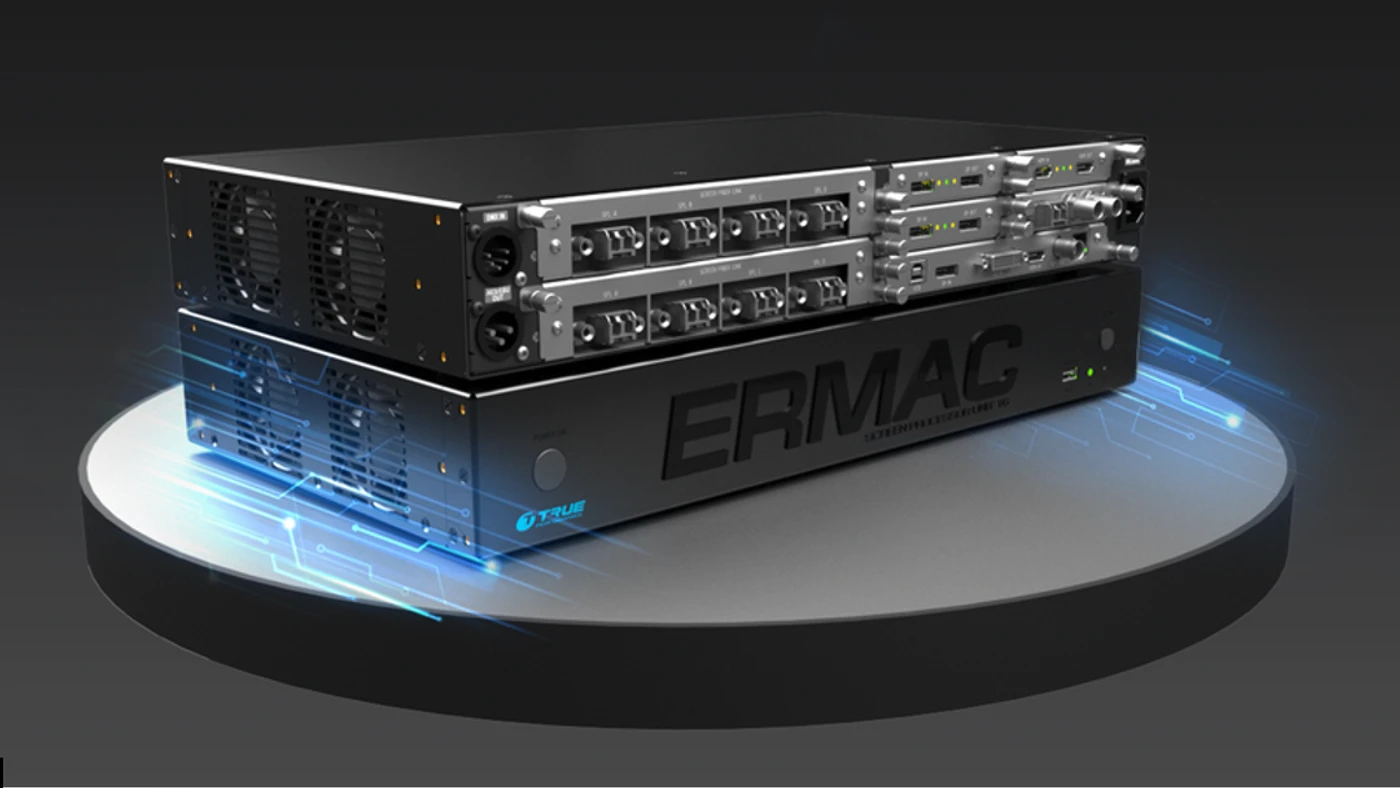
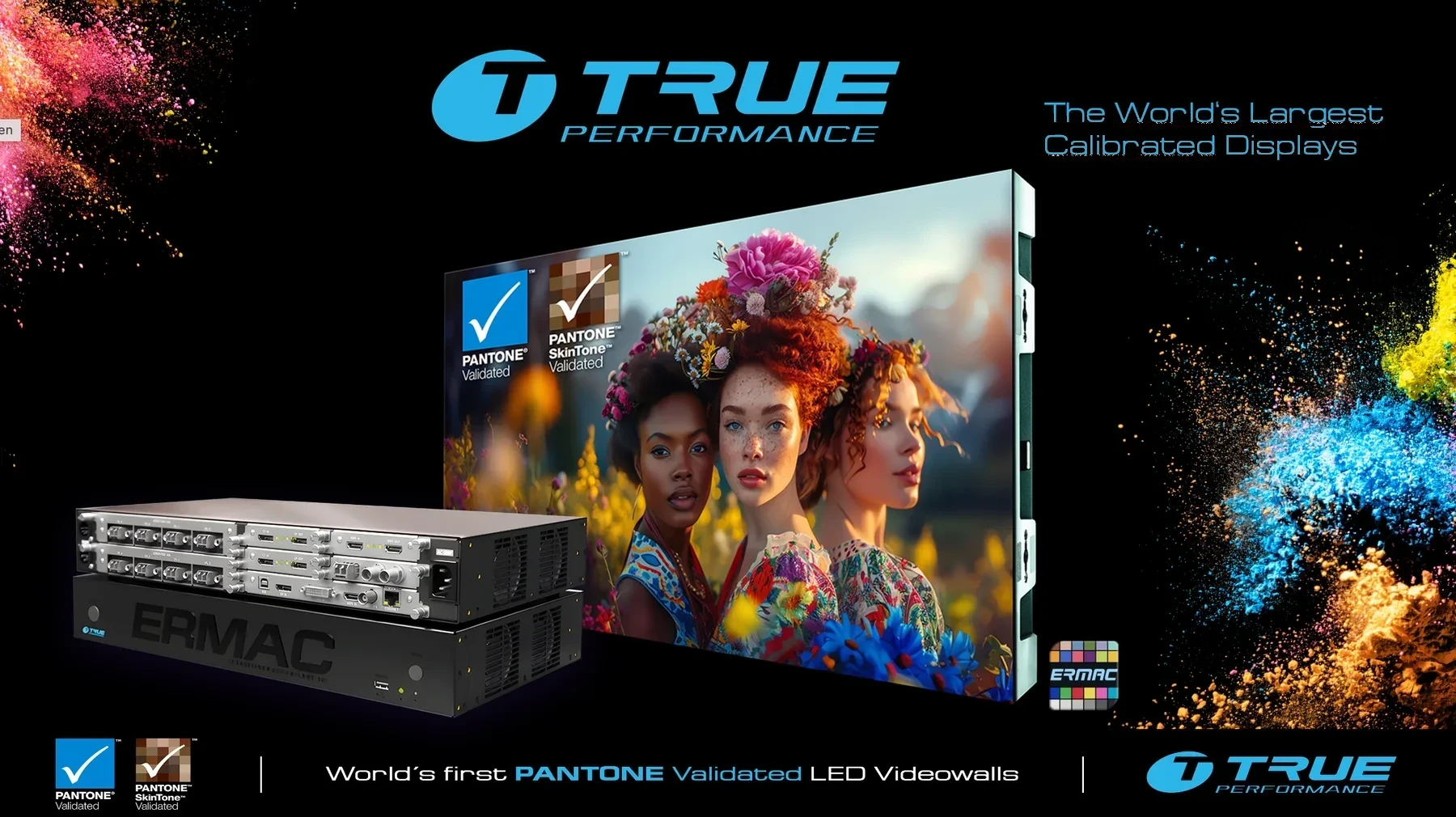
ERMAC is our proprietary, fully European developed and manufactured dvLED control system. It integrates the Color Space Engine, which ensures a Pantone validated color reproduction on all TRUE XF+ displays, for projects where color and detail accuracy and system security come first.
No foreign logic inside
Every part of the system that processes data is ours: the ERMAC processor, the LSC distributors, the receiving cards and the driver logic on the module. No foreign logic anywhere in the signal path. ERMAC itself is developed and built in Germany, a fully European component of the finished display.
The Color Space Engine
Measures each LED batch and compensates it inside the display, so color holds across brightness levels and production batches from source to pixel.
Pantone validated reproduction
Delta E below 2 in standard applications and below 1 where a design studio demands it, validated by Pantone on TRUE XF+ panels.
One panel, not any panel
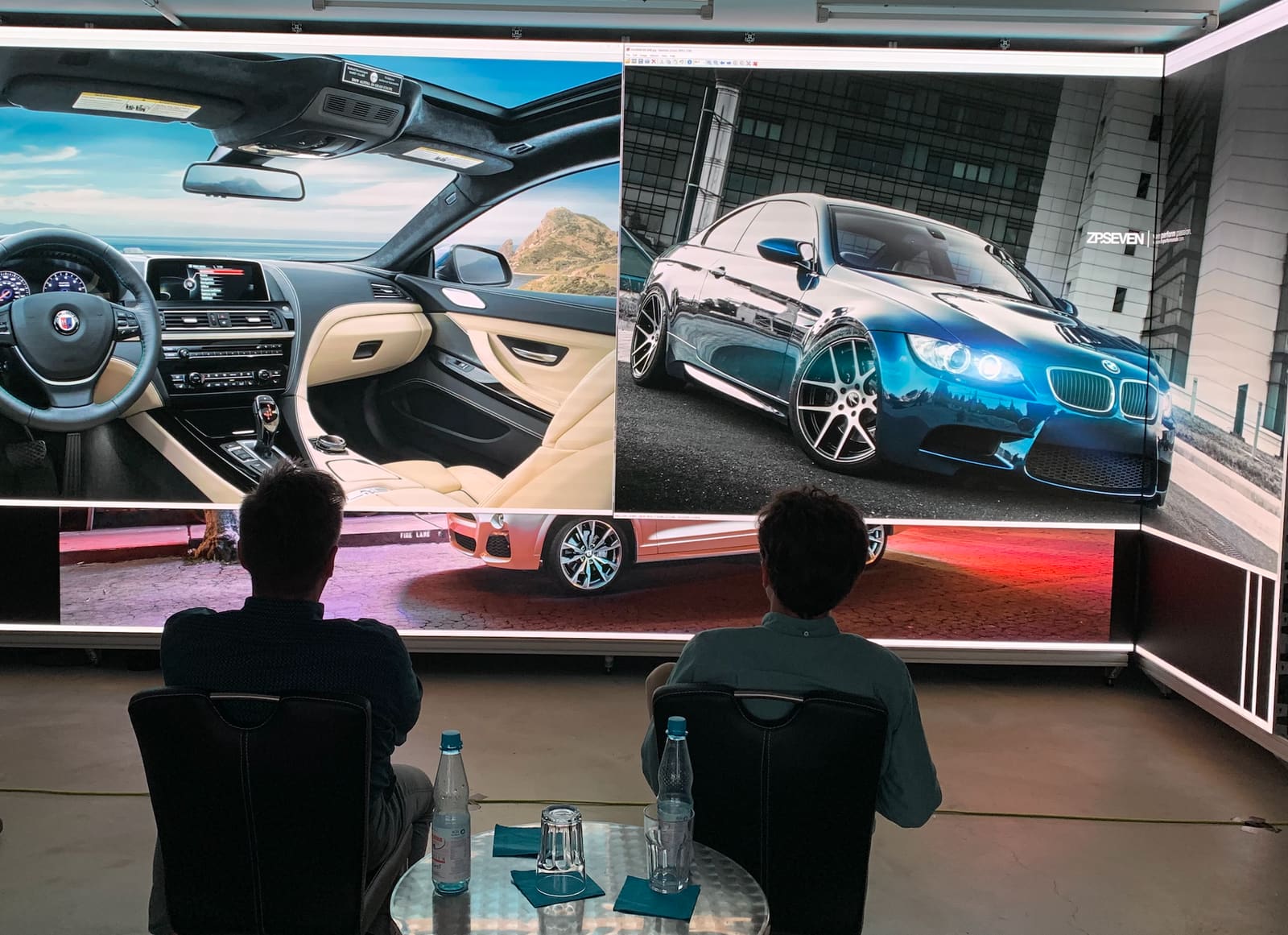
Most control systems are built to drive as many different panels as possible, somehow. ERMAC is built to drive one specific panel perfectly, as a single product for a single project. That is a different engineering goal, and it shows on the dvLED wall.
Calibrated in the booth, held on the dvLED wall
The Color Space Engine keeps a Pantone validated reproduction steady across brightness levels and across production batches, so what you approve is what you see.
From processor to panel, one engineered path
A finished picture is the whole chain working as one. The ERMAC processor sets and holds the image, the signal converter feeds every panel cleanly, and the panels render it. Because each link is our own, calibration and timing carry through from end to end, with nothing lost between vendors.
Reliable, color and detail accurate dvLED is not a bill of materials. Buying the most expensive processor and the best driver IC and fitting them to an off the shelf panel does not produce a reference display, because the picture is decided by how the parts work together, not by which parts are used. Processor, signal distribution, receiving card and module logic have to run in unison, synchronised and calibrated as one system and fine tuned to one another down to the last bit. That is the work TRUE Performance, with its EKTA roots, has done since 1992, never for the panel alone or the control system alone, always for both together. We call the result Synched Brilliance.
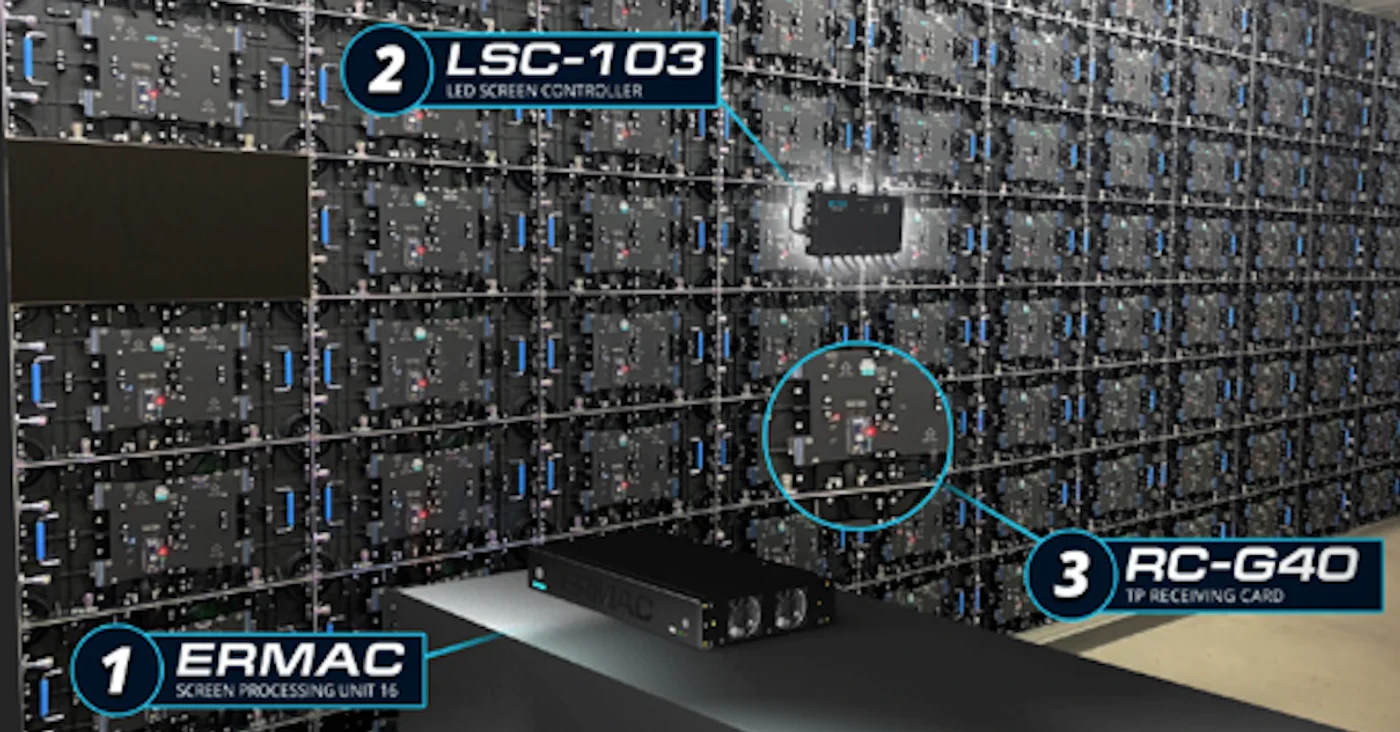
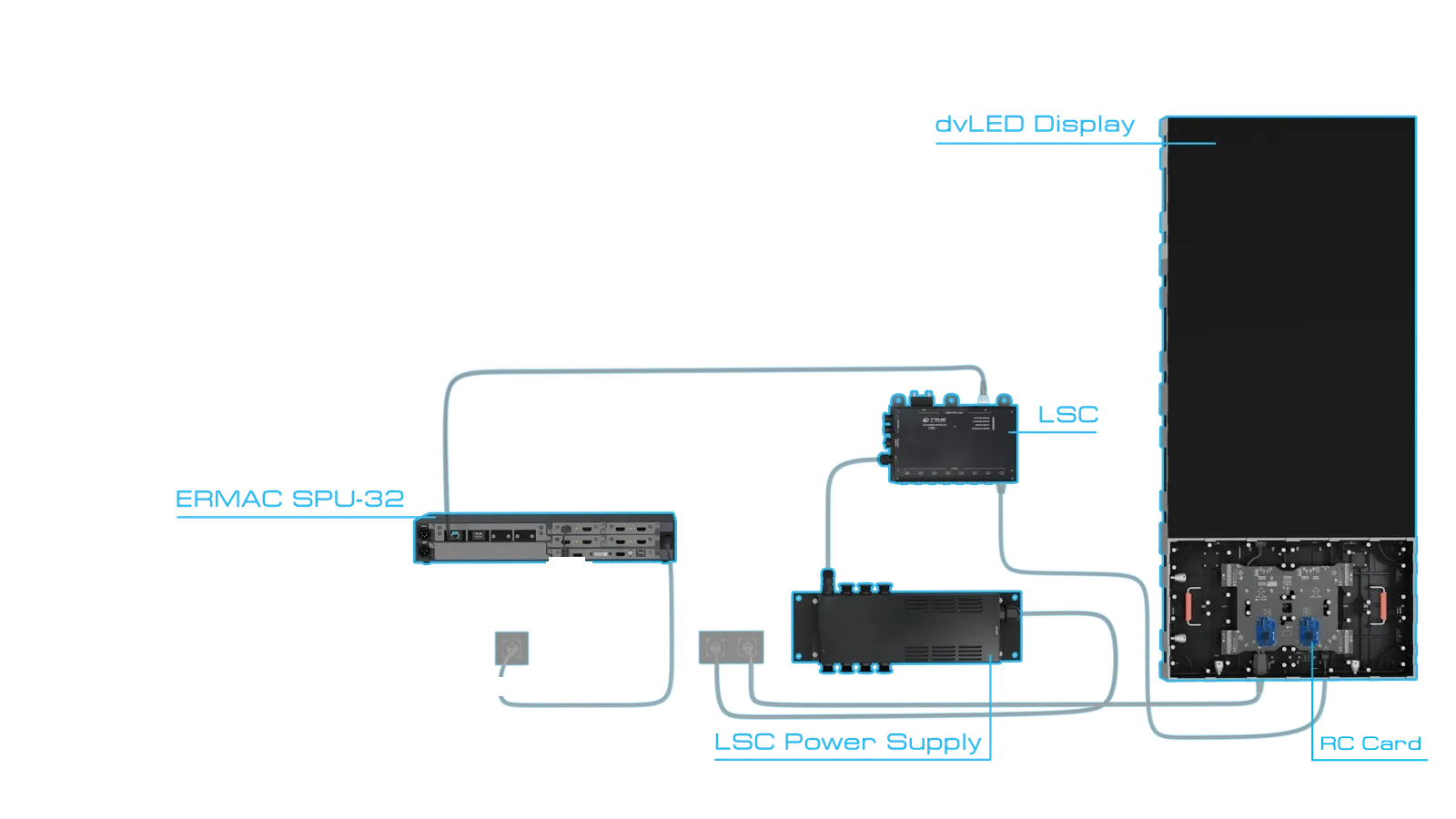
The complete signal chain, from the ERMAC SPU-32 through LSC signal distribution and receiving card to the dvLED display. Every component engineered by TRUE.
Inside the ERMAC SPU-32: 26 bit processing, 240 Hz, fiber I/O
Made in Europe, the ERMAC SPU-32 processes at 26 bit, runs frame rates up to 240 Hz, calibrates automatically through the Color Space Engine and connects over fiber. The same processor drives a meeting room, a virtual production volume and an automotive design studio.
Color Space Engine
The Color Space Engine measures how each LED batch actually behaves and drives those LEDs accordingly, building the color space calibration inside the display. No manual color adjustment on the dvLED wall, and Pantone colors reproduce at every brightness level.
26 bit internal processing
The foundation for exceptional detail accuracy: the processor works with far more internal levels than the incoming signal itself, which preserves subtle color transitions and prevents banding or detail loss. Even at low brightness, every tone, highlight and shadow is represented smoothly and consistently.
Fully modular I/O
Configurable input and output slots support DisplayPort, HDMI, SDI, ST 2110, fiber optic and Ethernet modules, with audio carried over the fiber link, so the same processor adapts to broadcast infrastructures, IT environments and long distance fiber runs alike.
240 Hz Multiview, 480 Hz ready
One dvLED display shows two completely different image streams at the same time, each perfectly synchronized. Two viewers, two contents, one dvLED wall, a capability unique to the ERMAC platform, with the architecture ready for 480 Hz.
Smart Gamma and HDR
PQ and HLG high dynamic range with PQ to HLG transformation, plus regular, BT1886 and custom gamma correction, so content grades translate faithfully to the dvLED wall.
The dvLED wall reports back
A feedback link carries live diagnostics from every cabinet: operating state, temperature and voltages, plus light sensor readings for automatic brightness control. Faults surface before anyone sees them on screen.
The light sensor readings drive automatic brightness control, so the dvLED wall follows the room from morning daylight to evening instead of being set once and forgotten.
The right control for the job
For everyday tasks TRUE also offers solutions built on NovaStar and Colorlight: common, reliable and easily accessible platforms that many integrators already know. We place no constraints on where the panel logic comes from. You get the control platform that fits the project, backed by the same European engineering and support.
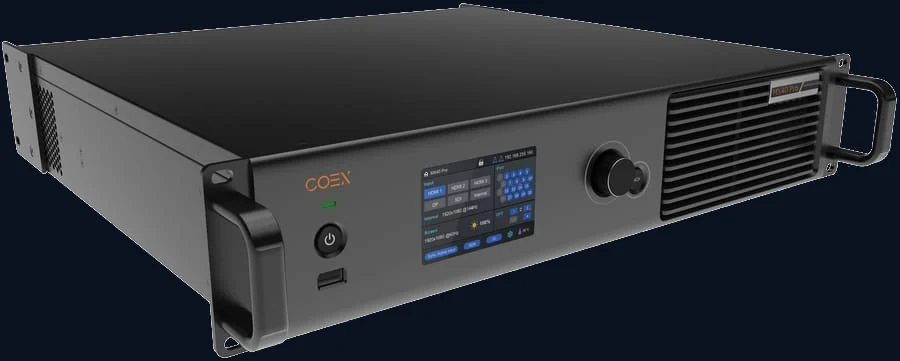
NovaStar based solutions
Widely used across the industry for their accessibility and large ecosystem of compatible hardware, a strong fit where broad support and scalability lead the requirements.
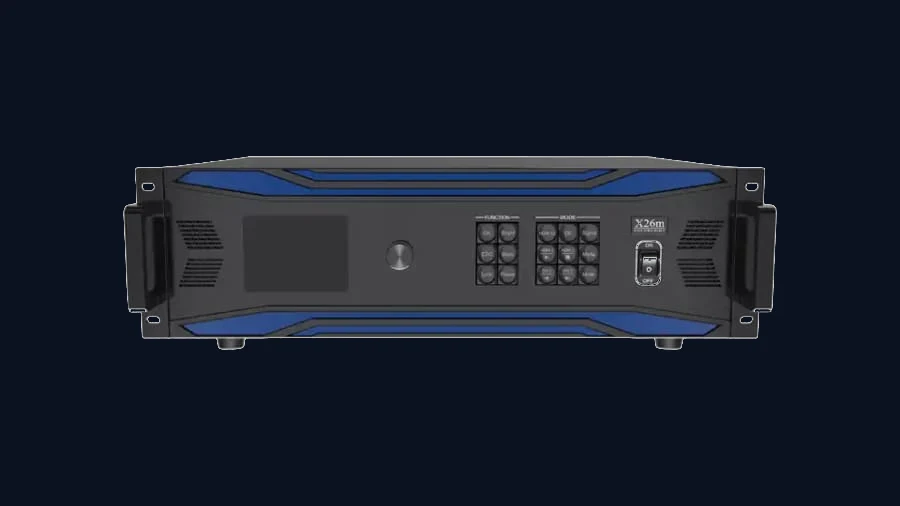
Colorlight based solutions
A flexible, software driven approach to driving dvLED displays, well suited to projects that value adaptability in the workflow.
Not sure which control system fits?
Tell us the priorities of your project and we will recommend the right platform, then size the dvLED wall around it.
Control system questions
What is the ERMAC control system?
ERMAC is TRUE’s own control and processing system, fully developed and manufactured in Europe. Its Color Space Engine delivers a Pantone validated color reproduction on TRUE XF+ panels, holding Delta E below 2 in standard applications and below 1 where a design studio demands it. Every part of it that processes data is ours, with no foreign logic in the signal path.
Do you only work with your own control system?
No. ERMAC is our own and our primary system. For everyday tasks we also deliver and support solutions built on NovaStar and Colorlight, common and reliable platforms that are easy to source and easy to service. We place no constraints on where the panel logic comes from, so you get the control platform that fits the job.
Why does owning the control system matter?
Color, detail and security depend on the control system and the panel behaving as one. When we develop both, we calibrate and secure them together, which is not possible when the two halves come from separate vendors.
Can I get the same result by fitting a premium processor and driver IC to a standard LED panel?
No. Color and detail accuracy are not decided by the parts list but by how the parts are combined, calibrated and fine tuned to one another. A premium processor on an off the shelf panel is still two products meeting in the middle. TRUE engineers the module logic and the ERMAC control system as one system and calibrates them together down to the last bit, which is why the result is repeatable and Pantone validated.